Posts by Roger Dennis

Innovation without the jargon to give clear tangible results.

Interview with Tony Ulwick – author of “What Customers Want” (part 2)

(…continued from part one)

3. How would you describe your process?

In my recent book, What Customers Want, (McGraw Hill, 2005), I reinforce the theory that customers buy products and services to get jobs done. [Harvard Business School professor Clayton Christensen introduced this terminology in The Innovator’s Solution. He also cites my work in his book as we have been pushing this thinking for years.] If a company wants to think like a customer, it too must focus on the jobs the customer is trying to get done. This point has far-reaching ramifications.

When the job is accepted as the unit of analysis it means that companies must not capture requirements on a product or service – rather they must capture requirements on the job or jobs that the product or service is intended to perform. This means that instead of asking customers about improving a product, VOC practitioners must be more process focused and
(1) deconstruct the job the customer is trying to get done into process steps, and
(2) determine what metrics customers use to measure the successful execution of the job.

We call these metrics the customers’ desired outcomes. [I first introduced this thinking in the January 2002 HBR article, Turn Customer Input Into Innovation]. We have developed over 40 rules regarding the structure, content and format of these statements. Precision is the key to removing variability from the process.

A customer need, then, is defined as the customer’s fundamental measures of performance associated with getting a job done. This is a critical point, because after these metrics are uncovered, they are prioritized to reveal which are highly important and poorly satisfied (underserved) – thus revealing the best opportunities for growth. This valuable information (which is what I was looking for back in the days of the PCjr) is then used to prioritize the development pipeline, brainstorm new ideas, evaluate product concepts, communicate a products value, etc.


4. What’s an example of an organization that has successfully used the process?

Over 10 years ago Cordis Corporation (now a division of J&J) used it to define a new line of angioplasty balloon products which drove their market share from less than 1% to about 20% in 2 years, placing them in the market leadership position. Bosch Power Tools used this approach to create the award winning CS20 circular saw – giving them a wining entry into a highly competitive and mature North American market. More recently, Microsoft has adopted this thinking and completed dozens of projects aimed at identifying and addressing opportunities for innovation. Other companies that have successfully used the approach include AIG, Kimberly Clark, HP, Chiquita International, Cargil, Allstate, MetLife, United Technologies, Dentsply, Ecolab, Unilever, and the Harvard Kennedy School of Government.

The history of Innovation Tools

In his latest Ice Update, Eric Mankin of Babson points out that incentives to spur innovation – such as the X Prize – are not new. In fact, they’ve been around for long time. One of Mankins readers – Parker Neal – points out :

In 1919, a gentleman named Raymond Orteig offered a prize of $25,000 to the first person who could fly an airplane non-stop between New York and Paris. The Wright Brothers had left the earth 16 years earlier, but flight hadn’t grown rapidly … Orteig thought it was time for that to change.

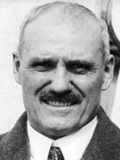
Raymond Orteig - a man ahead of his time...

Hubert Julian, Rene Fonck, Charles Nungesser, Francois Coli and others tried and failed. Nine teams in total spent around $400,000 to try and win a prize that was 1/16th of that amount (hardly cost effective). But Lindbergh succeeded. He promptly became a national hero. Air flight took off.

Mankin also mentions that other innovation approaches have long precedents. Thomas Edison blazed the path for effective innovation environments when he established the innovation factory in Menlo Park. Edisons approach was team based and used rapid iterations of prototypes.

Sound familiar? Hello Ideo. Hello What If….

Note : Eric Mankins updates are usually email only. Some of the older ones can be found here.

Interview with Tony Ulwick – author of “What Customers Want” (part 1)

Tony Ulwick

Over the next week I’ll be posting an email interview with Tony Ulwick – author of the fascinating book “What Customers Want.” I’ve not read many interviews with Ulwick, which is why I’m posting this. He has developed a thorough and unique framework for innovation which brings incredible clarity to an otherwise mis-understood process. In this interview he talks about why innovation can be a repeatable process, and what led Clayton Christensen to heap praise on his methodology.

It’s a multi-part posting as Tony has written full and thought-provoking replies to my questions.

Here’s the first part :

1. How long did it take to develop the idea of outcome-driven innovation?

It took about 15 years to turn outcome-driven innovation theory into a rules-based discipline. We have developed this unique approach to innovation to the point where companies can now uncover and prioritize hidden growth opportunities in any market with near 100% precision.

2. Where did the concept originate?

The initial concept came to me when I was working at IBM on the PCjr. The day after the product was introduced, the Wall Street Journal declared the product a flop. After overcoming the initial disappointment, I thought, “if we knew what criteria people were going to use to judge the value of a product in advance, we could design the product to meet the criteria and ensure its success”. Trying to figure out how customers judge value and how to capture that information from customers in advance became my top priority.

I first discovered how a customer “need” should be defined from the customer’s perspective when engaged in core market growth initiatives and how that definition changes in when working in the area of new market creation. Through the experience of hundreds of customer interviews, I then figured out what the standard structure, content and format of a customer “need” should be. Finally, I went on to create the best methods for capturing these unique inputs into innovation and new quantitative research methods to prioritize them. Most importantly, my team and I have, over the past 7 years or so, discovered how this unique information can be used to more effectively segment markets, position a product, communicate a products value, prioritize the development pipeline, brainstorm new ideas, conduct competitive analysis and perform many other tasks associated with innovation.

(Part two is here)

Grant McCracken on the need for scanning

Grant McCracken has a great post about the difficulties that corporations have with scanning for non-incremental innovation. His thoughts build on the recent HBS article about fringe scanning which I blogged about here.

In seeking a solution to stopping the organisation getting blinded, he suggests :

…the creation of an observation platform from which we can keep an eye out for the next new things. In keeping with our Tsunami references, let’s call it a wheelhouse, a conning tower, or a ship’s bridge.

The trick would be to find 5 or 6 really smart, well educated, well informed, well connected, deeply curious, utterly practical people. These qualifications create a tiny Venn intersection, but, hey, we only need 5 or 6 people.

I once worked as part of team for an online bank in London doing exactly what Grant suggested. It was fascinating work, but it was also the first place that the CFO looked for making cuts when the company went into a retrenchment phase. The people that left at that time went on to create some fascinating new business, like zopa.

In cutting back the team that looked for early signs of new business ideas, they also cut back their source of new revenue from potentially disruptive ideas.

Do the words “shot” and “foot” spring to mind?

Footnote – in the comments to Grants post, there’s an eye popping quote (by Tom Guarriello) from Chris Anderson (Wired editor) at Pop!Tech : “I do whatever my intern tells me. If s/he tells me to run a story about X, I do, even if I don’t get it.”

Is this the current state for play for corporate innovation?

From the FastCompany blog, comes this interesting post about the difference between people talking about something, and actually doing something. This is a classic with innovation inititatives in many large organisations.

It’s trendy, it’s sexy, everyone likes to think they’re innovators, and the marketing department just put the word on the box of the latest widget (because it now comes in a range of trendy colours).

Lots of talk, little action.

I’ve often found a frequent offender to be the manager who’s gung-ho about a new management book. He likes the concepts. He talks about them often. He gets others to read the book. They like them too. The book’s jargon makes its way into their everyday language. Everyone’s excited to be on board with the latest management thinking. Amidst the excitement, everyone fails to realize a simple fact. They’re not actually putting the concepts into practice.

The post is written by an executive coach called Doug Sundheim. I’ve often read his column in the magazine itself, and he offers an interesting little exercise at the end of the post. If you are involved in an innovation scheme in your organisation, spend five minutes on the exercise, ponder the result, and then treat it as a call to action.

The impact of digitalisation

I was listening to a podcast by Marc Andreessen (Co-Founder of Netscape) in which he discusses the history of programming.

He's smiling because he made a hell of a lot of money...

It’s a bit of a geek out, but he makes some interesting points :

1. Programming tools are no longer made for machines, they’re made for programmers. this makes them really easy to learn how to use.
2. Servers are now a commodity, and the number of servers sold has increased incredibly over the last five years
3. Bandwidth prices are still plummeting
4. Open source tools mean that the barriers to entry have disappeared (from a cost point of view) when it comes to building web applications

What does this mean?

In a world where many businesses are now becoming digitalised to some extent, and almost everyone is trying to interact in a cheaper and smarter way with their customers (usually online in some shape or form), the next disruption to your business might not be from your competitor.

It might come from a self-taught kid in Brazil who has unintentionally designed something which is going to kill your business.

Think of the barriers which were around when Andreessen formed Netscape. Or when Shawn Fanning wrote the code for Naptser.

Now think of how many of those barriers has gone. And then think about your business.

“The interesting stuff happens on the edge” (in many sectors)

David Skilling, chief executive of The New Zealand Institute, is quoted in a Time Magazine article about the state of New Zealand as a country. Skilling is a very interesting person for a whole number of reasons, and very bright. In the article in makes some very topical points about the impact of geography on globalisation (which is outside the focus of this blog), but he also makes an interesting point about the fringes :

Just like in biology,
the interesting stuff
happens on the edge.

Quote of the day

I was listening to a radio interview with Matthew Riley, an Australian writer of thrillers aimed primarily at teens. He was 19 when he wrote his first book, but he got rejected by every publisher in Australia. In the end he published a few copies of the book himself, and went door-to-door in Syndey asking bookshops if they would put his first book on the shelves.

A lot of people told him it could not be done. This was his response :

When people tell you that it can’t be done, it usually means that they can’t do it themselves

How much of that can you apply in your professional (and personal) life?

The value of fringe scanning (HBS article)

Something I had been meaning to read for a while was the excellent HBS article called Scanning the Periphery (it’s a PDF). The article – which in the HBS tradition – has become a book, examines the value of fringe scanning and suggests methods for doing so. Interestingly there is also a “Peripheral Vision” blog which is suffering from neglect with a mere three entries.

This quote goes some way to encapsulating the value of fringe scaning :

Buckminster Fuller developed a very personal and systematic approach to scanning the periphery. Whenever he was at an airport, he would randomly select a magazine from the stands in the bookstore and read it on his plane ride from cover to cover. On one trip the magazine might be about gardening, on another about fashion or airplane design. With each trip, Fuller learned something new and saw the world in a different way. Many managers could benefit from adding such vicarious reading discipline to their travel routines, especially now that we customize our computer screens and newsletters to report only what we deem relevant. Undirected searches may offer answers to questions that we do not even recognize or know how to formulate.

There’s also some interesting validation for harnessing the fringes inside an organisation :

Most organizations have maverick employees with insights about the periphery,but they rarely tap these individuals. Find informed people, either inside or out, who reject the conventional wisdom about your businesses. Maybe they are congenitally unhappy with the direction of the business, or maybe they are talented outliers with insights into new customers and technologies that give them an idea for a new business. What shifting winds are they feeling that the rest of the organization is missing? As Andy Grove notes in his book Only the Paranoid Survive, these mavericks usually have a difficult time explaining their visceral feelings to top management, who are usually the last to know.